

Original: Geoffrey Huntley · 17/01/2026
Summary
If you aren’t capturing your back-pressure then you are failing as a software engineer. I am fortunate to be surrounded by folks who listen and the link below post will go down as a seminal reading for people interested in AI context engineering.Key Insights
“If you aren’t capturing your back-pressure then you are failing as a software engineer.” — Highlighting the critical role of back-pressure management in software engineering.
“Back-pressure is part art, part engineering and a whole bung of performance engineering as you need ‘just enough’ to reject invalid generations.” — Describing back-pressure as a blend of art and engineering, essential for filtering out invalid outputs.
“Under normal circumstances pre-commit hooks are annoying because they slow down humans but now that humans aren’t the ones doing the software development it really doesn’t matter anymore.” — Discussing the shift in software development practices with AI’s involvement, making pre-commit hooks less of an issue.
Topics
Full Article
Published: 2026-01-17
Source: https://ghuntley.com/pressure/
I am fortunate to be surrounded by folks who listen and the link below post will go down as a seminal reading for people interested in AI context engineering. A simple convo between mates - well Moss translated it into words and i’ve been waiting for it to come out so I didn’t front run him.
Don’t waste your back pressure · Back pressure for agents You might notice a pattern in the most successful applications of agents over the last year. Projects that are able to setup structure around the agent itself, to provide it w…Enjoy. This is what engineering now looks like in the post loom/gastown era or even when doing ralph loops.
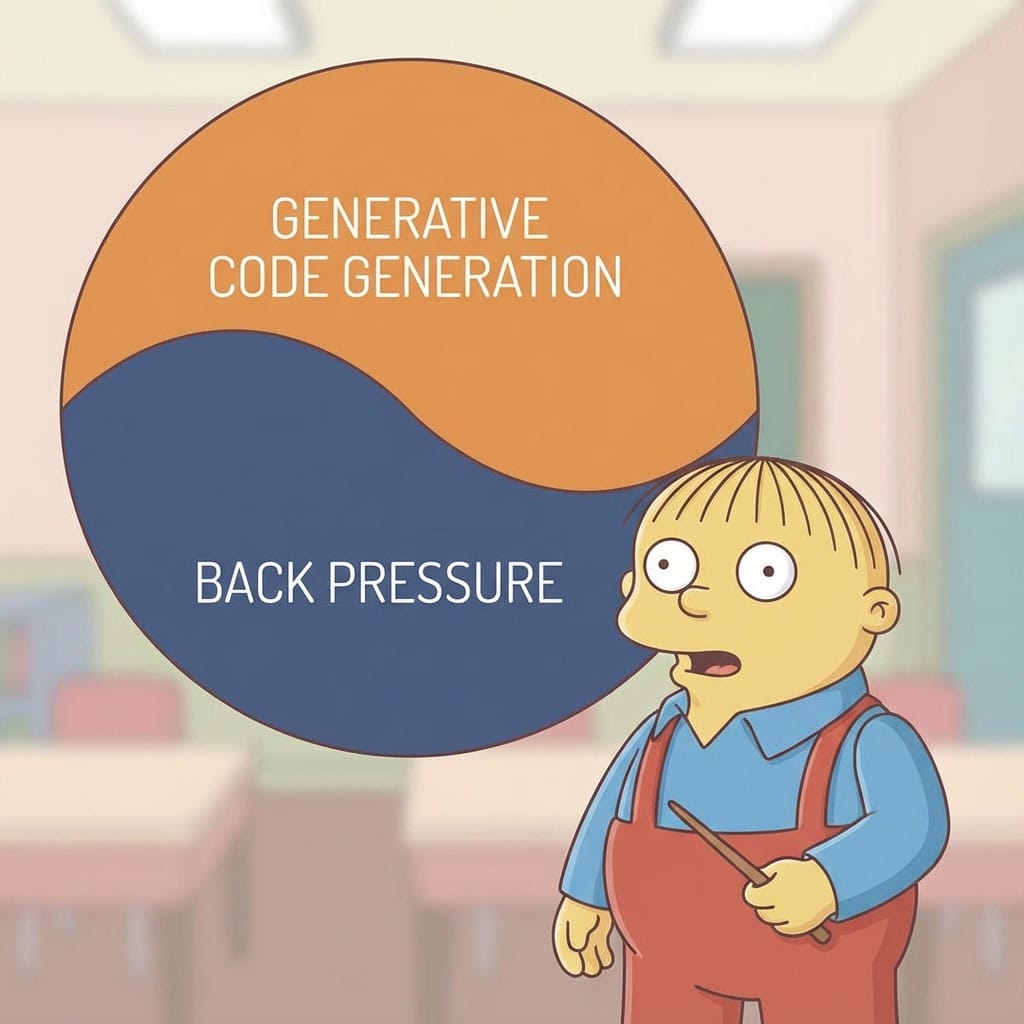 software engineering is now about preventing failure scenarios and preventing the wheel from turning over through back pressure to the generative function
If you aren’t capturing your back-pressure then you are failing as a software engineer.
Back-pressure is part art, part engineering and a whole bung of performance engineering as you need “just enough” to reject invalid generations (aka “hallunications”) but if the wheel spins too slow (“tests take a long time to run or for the application to compile”) then it’s too much resistance.
There are many ways to tune back-pressure and as Moss states it starts with choice of programming language, applying engineering knowledge to design a fast test suite that provides signal but perhaps my favorite one is
software engineering is now about preventing failure scenarios and preventing the wheel from turning over through back pressure to the generative function
If you aren’t capturing your back-pressure then you are failing as a software engineer.
Back-pressure is part art, part engineering and a whole bung of performance engineering as you need “just enough” to reject invalid generations (aka “hallunications”) but if the wheel spins too slow (“tests take a long time to run or for the application to compile”) then it’s too much resistance.
There are many ways to tune back-pressure and as Moss states it starts with choice of programming language, applying engineering knowledge to design a fast test suite that provides signal but perhaps my favorite one is pre-commit hooks (aka prek).
GitHub - j178/prek: ⚡ BetterUnder normal circumstances pre-commit hooks are annoying because they slow down humans but now that humans aren’t the ones doing the software development it really doesn’t matter anymore.pre-commit, re-engineered in Rust ⚡ Betterpre-commit, re-engineered in Rust. Contribute to j178/prek development by creating an account on GitHub. — GitHub
Key Takeaways
Notable Quotes
If you aren’t capturing your back-pressure then you are failing as a software engineer.Context: Highlighting the critical role of back-pressure management in software engineering.
Back-pressure is part art, part engineering and a whole bung of performance engineering as you need ‘just enough’ to reject invalid generations.Context: Describing back-pressure as a blend of art and engineering, essential for filtering out invalid outputs.
Under normal circumstances pre-commit hooks are annoying because they slow down humans but now that humans aren’t the ones doing the software development it really doesn’t matter anymore.Context: Discussing the shift in software development practices with AI’s involvement, making pre-commit hooks less of an issue.
Related Topics
- [[topics/software-engineering]]
- [[topics/performance-engineering]]
- [[topics/ai-agents]]
Related Articles
teleporting into the future and robbing yourself of retirement projects
Geoffrey Huntley · explanation · 73% similar
if you are redlining the LLM, you aren't headlining
Geoffrey Huntley · explanation · 72% similar
autoregressive queens of failure
Geoffrey Huntley · explanation · 71% similar
Originally published at https://ghuntley.com/pressure/.